
Jun 2 2026
Usage-Based Insurance (UBI) is not a new concept. In fact, we wrote a blog article about UBI back in 2015. Now, over 10 years later, UBI has shifted from a niche to an industry standard, with more than 21 million U.S. policyholders having signed up to share their telematics data as of the most recent survey in 2024. (source: Carrier Management).
Progressive and GMAC were the first to experiment with UBI back in 1997. While the business model of charging premiums based on driver behavior, vehicle mileage, and driving frequency made a lot of sense for some consumers, it took many years for other insurance carriers to adopt usage-based insurance.
Some of the key reasons why it took a while for insurance carriers and consumers to adopt usage-based insurance include:
Required hardware and software to track driving behavior (hard braking, speed/acceleration, mileage, time of day, etc.)
Consumers were concerned about data privacy, particularly location data
Savings were not significant enough
Fear of rate hikes for bad driving habits
While not all of the challenges with UBI have been solved, there have been many technological, economic, and lifestyle changes that have moved the needle.
Modern vehicles increasingly come equipped with built-in connectivity. At the same time, smartphone apps can collect driving data without additional hardware. These technological improvements have dramatically reduced the cost and complexity of deploying telematics programs.
Drivers increasingly expect services to reflect their personal behavior/lifestyle. UBI appeals to customers who believe they would qualify for a discount based on their safe and/or infrequent driving. “Pay-How-You-Drive” programs like Progressive’s Snapshot are offering average savings of around 19% (or around $322) per year upon program completion for safe drivers.
This model is especially attractive to:
Remote/Hybrid workers, who have drastically increased post-COVID pandemic
Low-mileage drivers, especially urban residents
Safety-conscious drivers
Insurers now use sophisticated analytics and machine learning to interpret massive amounts of driving data. These models can identify patterns linked to accident risk more precisely than traditional underwriting methods. As an example, AI merges driving data with external factors like real-time traffic density, road conditions, and weather alerts to evaluate risk contextually, rather than just in isolation. Additionally, the mobile apps reporting driver behaviour are now able to track distracted driving better, which the former OBII hardware could not.
As more insurers adopt telematics programs, competitors risk losing low-risk drivers unless they offer similar pricing models. Regulators in some regions are also encouraging innovative pricing methods that better reflect actual risk from the telematics data now available on modern vehicles.
UBI programs generally fall into two main categories:
Pay-As-You-Drive (PAYD) - Premiums are based primarily on mileage. Drivers who spend less time on the road pay less.
Pay-How-You-Drive (PHYD) - Pricing reflects driving behavior, including braking, acceleration, cornering, and speed.
PAYD may be the best choice for drivers who do not accumulate high mileage each year. However, for drivers who rack up more miles, but practice safe driving habits, PHYD would be a better choice. Some insurers combine both models, adjusting premiums based on both mileage and driving habits. These plans would only work well for drivers with low annual mileage and good driving habits.
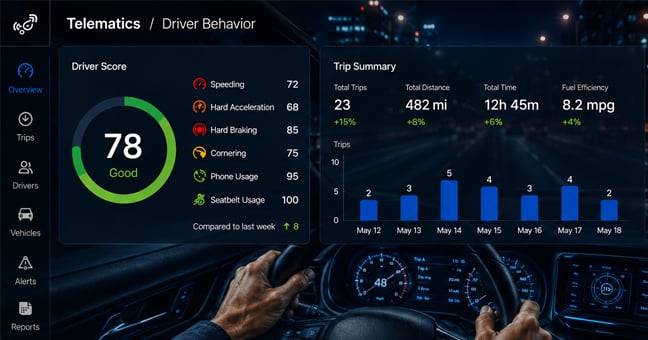
There are many benefits of usage-based insurance programs beyond the obvious cost savings for drivers with good driving habits and/or low annual vehicle mileage. Additionally, UBI can create an awareness of bad driving habits and incentivise safer driving. Insurance carriers can also potentially benefit from UBI programs, including more accurate risk assessment, reduced claims through improved driver behavior, and strong customer engagement via mobile apps and feedback tools. In many programs, drivers receive regular feedback and safety scores, helping them improve their habits over time.
Despite the many benefits of usage-based insurance, this insurance model is not void of challenges. One of the key challenges that has kept many consumers from signing up for UBI is privacy concerns. Some drivers are uncomfortable sharing detailed driving data, especially location or behavioral information, which is how PHYD models work. It is important that insurance carriers effectively communicate their telematics scoring systems and how behavior affects premiums to avoid any confusion for the drivers. Additionally, it is essential for insurance carriers to effectively protect this telematics data from breaches or misuse, as it may contain sensitive personal information.
Usage-based insurance represents one of the most significant innovations in auto insurance in decades. Powered by telematics, analytics, and connected technology, it shifts the industry away from generalized assumptions toward real-time behavioral data. Analysts expect strong growth over the next decade, driven by connected vehicles, smart city integration, and expanding partnerships across the automotive and mobility sectors. While privacy and transparency concerns remain, UBI's ability to reward safer driving and deliver fairer pricing signals a lasting transformation in how drivers pay for protection on the road.
