
Nov 16 2011
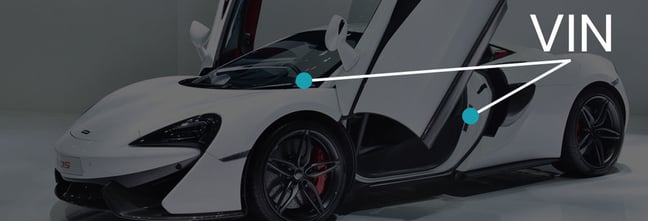
On current automobiles, the VIN is located on the dashboard in a location visible through the windshield, as well as, on the driver side door jam. You have probably also noticed the VIN recorded on the title, insurance, and registration of your vehicle. The VIN acronym stands for Vehicle Identification Number. It refers to a unique number assigned to a vehicle that contains information to describe and identify the vehicle.
While most people associate vehicle identification numbers with cars, they are used in the US and internationally for all variety of vehicles and equipment. It may not surprise you that motorcycles, heavy trucks, and buses all are assigned VINs, but even snowmobiles, tractors, back-hoes, and trailers have a VIN assigned to them during the manufacturing process. To understand what a VIN is, we need to look at how Vehicle Identification Numbers came into use and how they evolved into their current format.
While previously serial numbers were assigned to all vehicles, American automobile manufacturers started assigning VINs to the vehicles they produced in 1954. Some details of the vehicles were captured by the VIN. VIN use was not regulated and the length and composition of VINs was not standard. As time passed, use of VINs became industry standard for automotive and vehicle manufacturers. This was true both in the US and across the globe.
While use of a VIN was standard, the format and information contained in them was not. Each manufacturer created their own system and applied it to their own brands, capturing basic details like year, make, and model. Over the years, more information was captured by the VIN. This often included vehicle type, body type, engine, and country of origin. In 1969, a more systematic VIN system was put in place requiring that the VIN was permanently affixed to the vehicle and that patterns not be repeated within a 10 year period. In the 1970’s, US automotive manufacturers adhered to a 10 digit standard that lasted up through the 1980 model year.
In the late 1970’s, the International ISO issued two documents intended to standardize VIN assignment globally. These documents introduced the modern 17 digit VIN standard and the three digit World Manufacturer Identifier section at the start of that VIN. These documents were recommendations which are still followed by current manufacturers in the European Union.
In 1978, the NHTSA, building on the ISO standard, created a VIN standard that was required for all US light-duty and passenger vehicles. With some adjustment and additions, this is the standard the US and North America currently operate under (VIN Standard FMVSS 115, CFR49 Part 565). Some information about the NHTSA VIN standard:
• It is a requirement for all vehicles destined for use in the US.
• It went into effect for the 1981 model year and covered 30 years.
• Updated in 1996 to require manufacturers to assign a unique VIN to each truck, trailer, bus, motorcycle, and incomplete vehicle it produced.
• It was updated again in 2007 to cover an additional 30 years of vehicle models.
• The standard requires that a VIN pattern not be repeated for any two passenger or light-duty vehicles within a 30 year period.
• VIN standard requires certain information be captured and breaks down the VIN to six distinct sections.

The details of what information is captured in the VIN and its six distinct sections is covered in our next article, "What is captured in the Vehicle Identification Number?"
VIN Decoding 101 Article Index
Photo credit: i viewfinder / Shutterstock.com