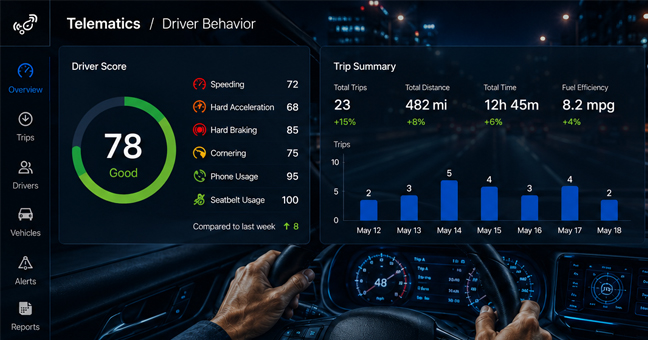
Usage-Based Insurance (UBI) is not a new concept. In fact, we wrote a blog article about UBI back in 2015. Now, over 10 years later, UBI has shifted from a niche to an industry standard, with more than 21 million U.S. policyholders having signed up to share their telematics data as of the most recent survey in 2024. (source: Carrier Management).
Progressive and GMAC were the first to experiment with UBI back in 1997. While the business model of charging premiums based on driver behavior, vehicle mileage, and driving frequency made a lot of sense for some consumers, it took many years for other insurance carriers to adopt usage-based insurance.
Read More
Topics:
Automotive Data,
Insurance
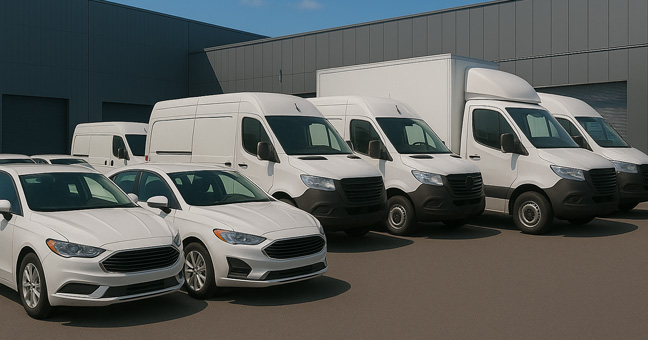
Fleet Management Systems (FMIS) and telematics platforms are no longer just about tracking assets — they’re about driving smarter decisions across every stage of the vehicle lifecycle.
Fleet owners and operators expect their systems to seamlessly load vehicles, know what’s in the fleet, manage service schedules and recalls, surface operational insights, and support informed decisions when it’s time to sell or replace assets.
At the center of all that capability? Accurate, reliable vehicle data.
Here’s how DataOne Software’s industry-leading automotive data powers both FMIS and telematics solution providers to deliver the precision, trust, and insight that today’s fleets demand.
Read More
Topics:
Automotive Data,
Fleet Management
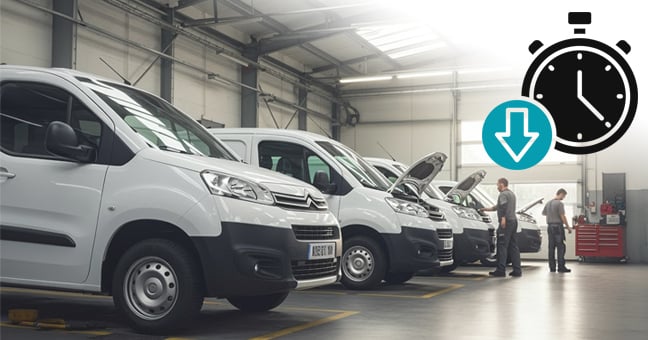
Fleet managers recognize that vehicle downtime, whether scheduled or unplanned, is one of the most persistent challenges to manage. This can directly affect productivity, delivery schedules, and profitability. On average, a single day of downtime in 2015 would cost a fleet between $448 and $760 per vehicle. Today, a company could see upwards of $1036 per day, per vehicle. This number could even be higher after factoring in the cost of parts and labor. While downtime is inevitable, with the right strategy in place, fleets can minimize their financial impact and even use it to strengthen their day-to-day operations.
Read More
Topics:
Fleet Management,
Service Data
DataOne’s VIN Decoding 101 article series laid the groundwork by breaking down what information is encoded in a Vehicle Identification Number (VIN), and what vehicle information you can expect to decode from a commercial VIN decoder. Now it’s time to take things to the next level. VIN Decoding 201 dives deeper into the complexities behind those 17 characters and why not all VIN decoding solutions are created equal when it comes to obtaining a highly granular level of detail in a consumable format. We’ll also look at how advanced VIN decoding powers today’s automotive ecosystem, influencing everything from vehicle merchandising, maintenance and repair to insurance, fleet management, and beyond. We hope the articles in this series will help better inform your decision in vetting your potential vehicle data partner.
Read More
Topics:
Automotive Data,
Vehicle,
VIN
When Amazon steps into a market, change is inevitable — and the auto retail industry is now bracing for this exact seismic shift. Amazon has already disrupted the aftermarket auto parts industry and has also offered vehicle research tools, including vehicle detail pages and digital showrooms, for a number of years to support today's car buyers. Following consistent consumer requests for a “buy box,” Amazon recently decided to support the purchase of new vehicles on its Amazon Autos platform, according to Matt Nuffort, Director of Amazon Autos. However, Amazon Autos is still in beta with Hyundai as its sole OEM partner.
What exactly does this mean for the traditional dealership car-buying model? Purchases are still being made through the dealer, only much of the process is being completed on Amazon. While some vehicles can be purchased directly from Amazon’s website, other vehicle listings require a visit to the dealer's website. As for test drives and vehicle pickup, this can only be done at the physical dealership. Despite this basic primer on Amazon car buying, many unanswered questions remain. Here are a few of the big ones:
Read More
Topics:
Dealers,
Vehicle Shopping,
Digital Retailing
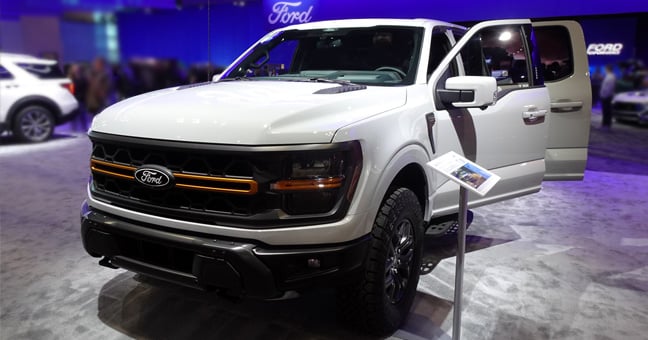
Domestic pickup trucks continue to dominate the U.S. automotive market, with Ford leading the pack year over year. The Ford F-Series has been the best-selling truck line in the country for decades, with approximately 732,100 units sold in 2024 alone. These popular vehicles are also among the most highly customizable on the market, offering a wide range of trims, packages, and configurations, which makes accurate, build-level data more critical than ever.
Read More
Topics:
Automotive Data,
Build Data,
API
It turns out that consumers are not the only ones holding onto their vehicles longer. 30 percent of fleet managers also plan to extend the lifecycle of their vehicles, according to an EVAI survey referenced in this Digital Dealer article. The survey attributes this to the potential cost increases from import tariffs, however, vehicle prices and interest rates have been climbing for a while (pre-tariffs), dating back to the COVID pandemic where the supply chain became a major issue for acquisition. According to this Automotive Fleet article, fleet managers have been extending the use of their fleet vehicles for a few years now.
In a time where budgets are tight, rather than stretching fleet budgets thin by replacing vehicles at a certain fixed mileage or age milestone (regardless of vehicle condition), fleet managers can better maximize the value of each asset by implementing a “fleet preservation” strategy coupled with advanced fleet management tools and telematics data.
Read More
Topics:
Fleet Management
The auto industry is going through a transformative period as technologies advance rapidly and vehicle manufacturers work tirelessly to electrify their model lineups to meet strict emissions regulations. The push towards electric vehicles is an exciting yet, in some ways, uncertain time for consumers and businesses alike. We've written a series of EV-related articles covering some major topics in the EV landscape, as well as some more specific topics for certain business use cases. Whether you're looking to learn more about how EVs function and how they differ from their ICE counterparts or the implications EVs have for the auto industry, we hope these articles help answer some of your most pressing questions.
Read More
Topics:
Automotive Technology,
Electric Vehicles,
Article Series
This post has been republished with updates since its original publication date of December 2011.
It is not uncommon for some of the people who express interest in our VIN data to have little experience with automotive data in the past. They may be new to the company/position, or they may be looking to apply an existing business model in a new way that requires a VIN decoder or vehicle data. Many times, these people are not quite sure what to expect to get in return for decoding 17-digit VINs. Below is a list of 10 things that you can expect to be returned when decoding US passenger and light-duty vehicle identification numbers.
Read More
Topics:
Logistics,
Automotive Data,
Vehicle,
VIN,
Auto Manufacturers,
Vehicle Equipment
The automotive industry experienced a shift last year towards more strategic growth as it navigated the evolving landscape of electric vehicles (EVs), autonomous vehicles (AVs), and new partnerships. While EV adoption continued to grow, the pace was slower than anticipated. Autonomous vehicle technology has continued to progress, and Bill Gates has stated that we will reach the tipping point with semi-autonomous vs fully autonomous vehicles within the next decade. Industry partnerships also became increasingly important as automakers sought to share resources, reduce costs, and accelerate innovation in an increasingly competitive environment.
This blog explores how these three interconnected trends - EV production adjustments, the development of autonomous vehicles, and the growing role of strategic partnerships - highlight the importance of a measured, adaptable approach to navigating an ever-changing market.
Read More
Topics:
Automotive Technology,
Electric Vehicles